Study – Experience – New Progress
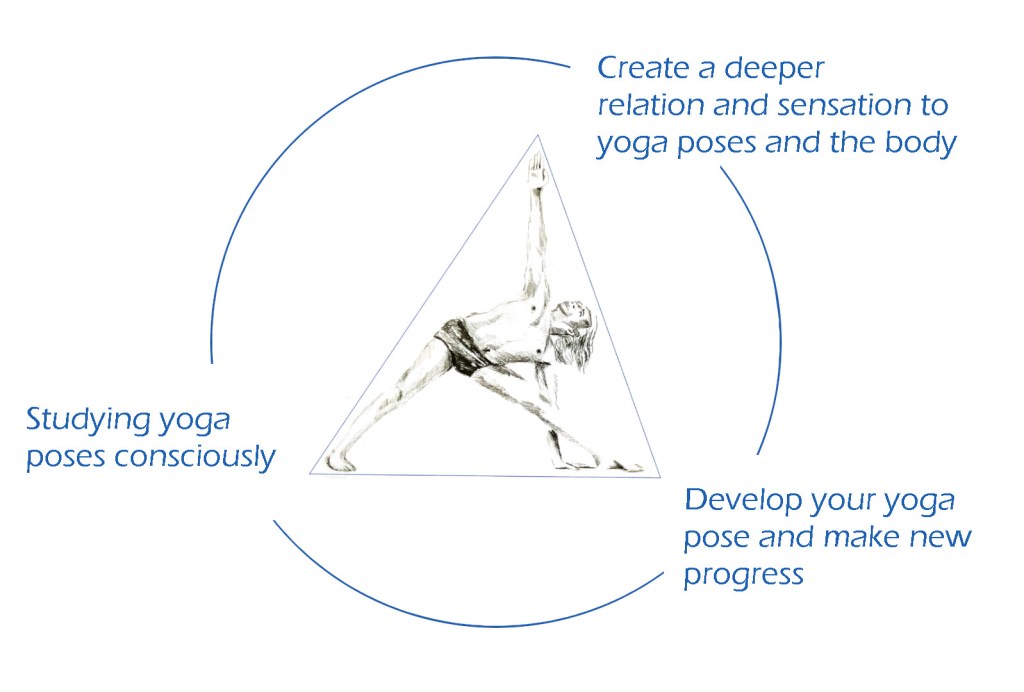
Expression of yoga poses
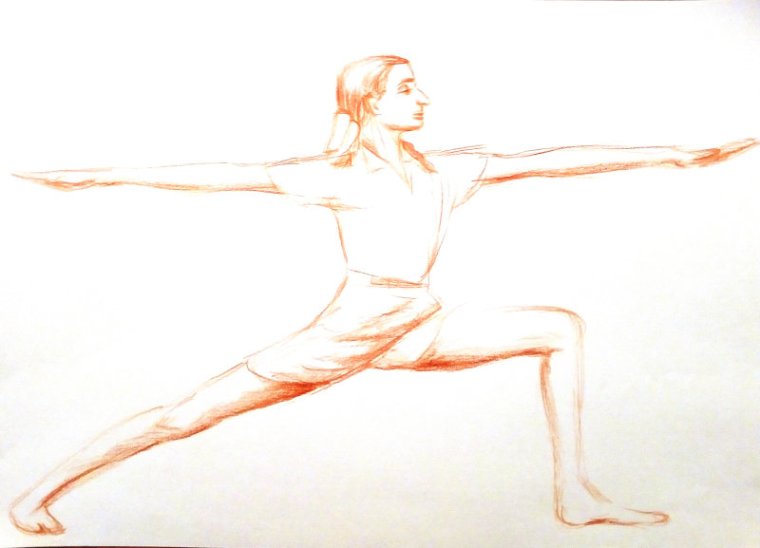
First you look at a yoga pose, then you develop a feeling and consciousness for it´s quality and characteristic and then you transform it into your practice. In the drawings, I work out different aspects and characteristics from yoga poses and want to make them visible.
1.Learn seeing of yoga poses through artistical criteria – general aspects
- 1. Seeing a yoga pose through artistical criteria
- 2. Seeing the dynamic in yoga poses
- 3. Seeing lines of action in yoga poses
- 4. Studying individual yoga poses and expressions
- 5. Training objective seeing
Study artistical criteria and individual expression of Yoga Poses
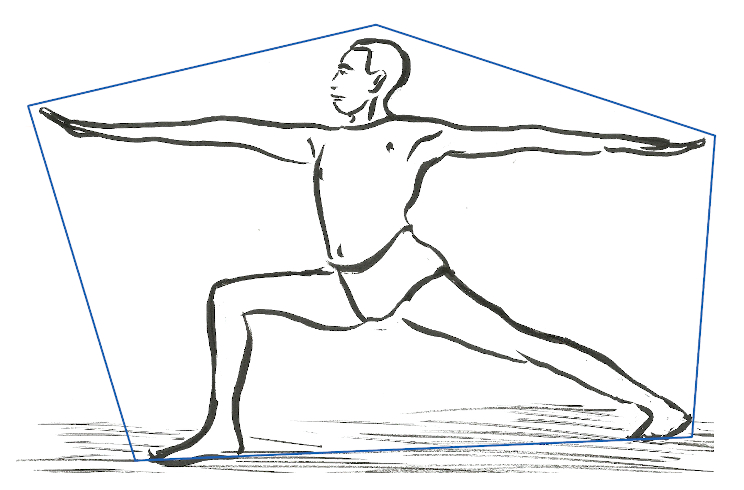
First of all, you look at a yoga pose and you start studying various criteria, like the shape, the plumb line, the handeling with tension, etc. This demands your ability to focus your consciousness on a yoga pose for a longer time. There are some easy and interesting criteria for (yoga) poses in general: “spacial geometry”, “lines of actions”, “circumference and center”, “centers”, “tension” , “the plumb line”, “harmony”, “planes”, “coordination” and “sens for threedimensionality”.
Above this artistical criteria there exists also ain individual expression relating to the person. With the individual expression is not meant the progressiveness and the perfection and performance, but the relation of the person to the essence of a yoga exercise.
2. Seeing the dynamic in yoga poses

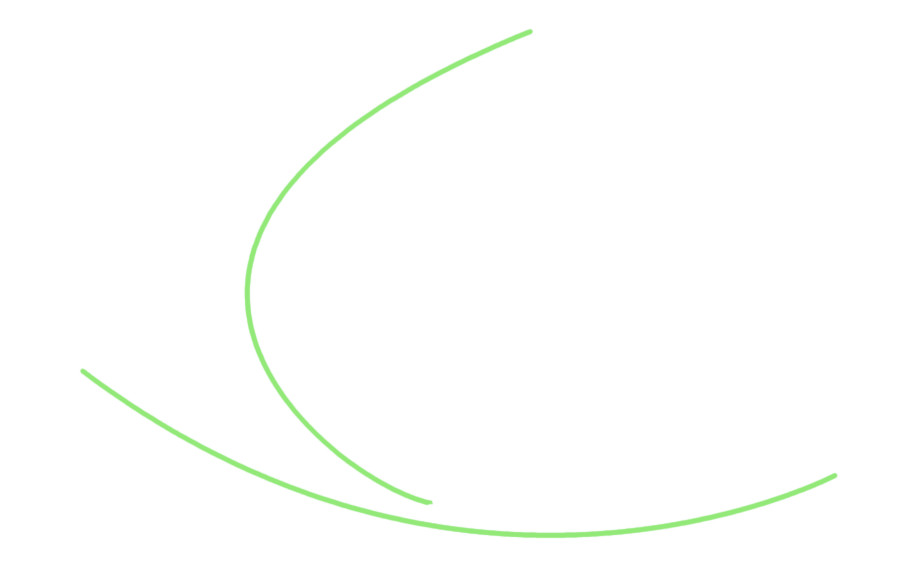
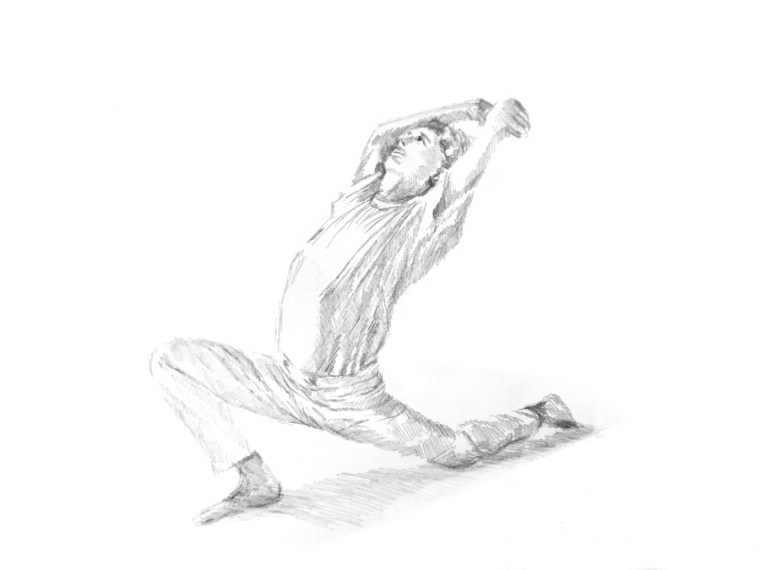
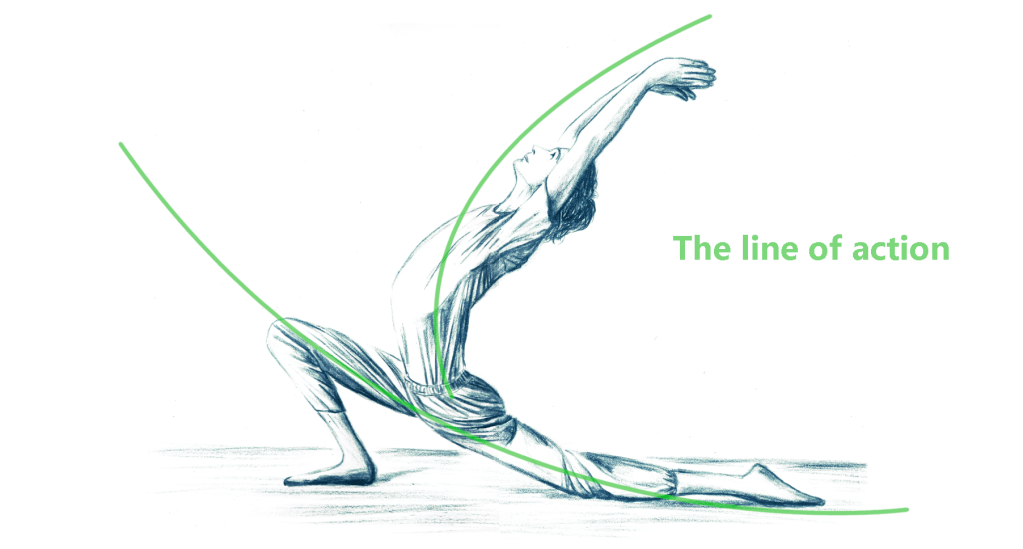
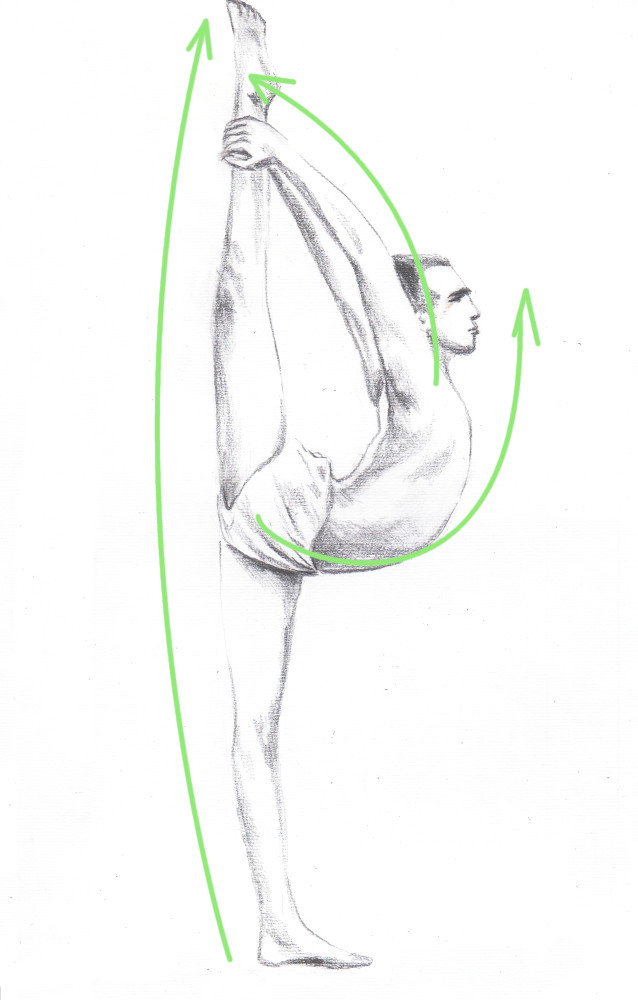
In Art, in general dynamic lines of poses are called “lines of action”. If you look at a picture, you can feel a kind of dynamic or movement – if it is expressed by the person. In this yoga pose (Anjaneyasana ) by Heinz Grill, there are two major movements or lines of action. One is concave and leads through the legs, and the other one is convex and is rising through the upper body.
A yoga pose can express dynamic and movement. The seeing of the dynamic lines of action promotes you, to make your postures lively and expressive, too. The lines of dynamic depend very much on the person and it´s relation to the pose and to the body.
3. Studying lines of action in yoga poses
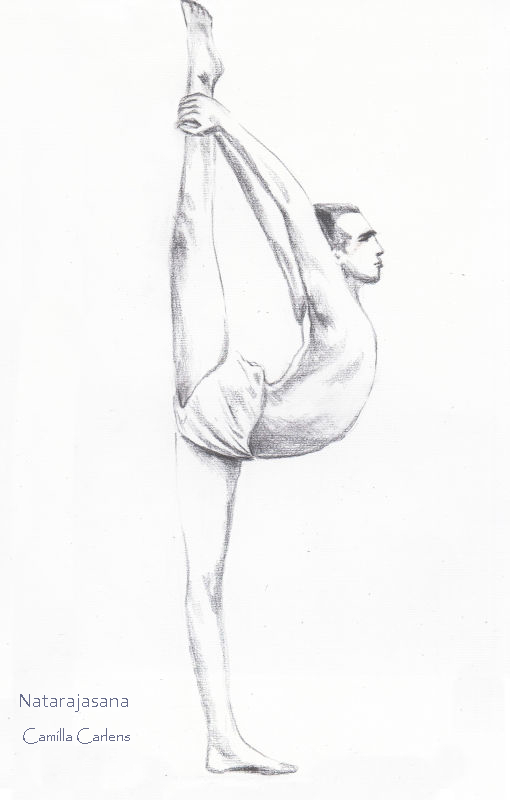
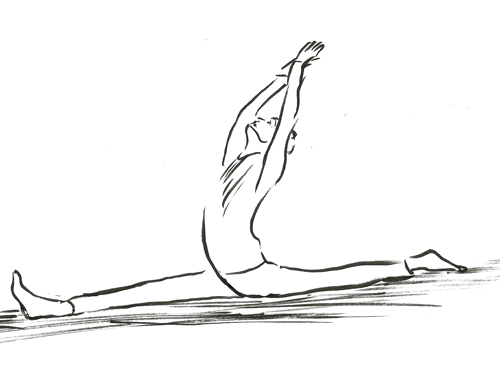
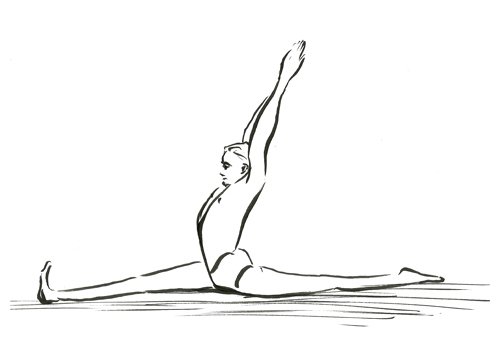
The lines of dynamic depend on the expression of the person. Of course you can find general lines in each pose. but the lines of actions are really lines of action. They express action, dynamic and movement. They are visible, due to the expression and creative process of a person. Here are some examples for lines of dynamic in yoga poses.
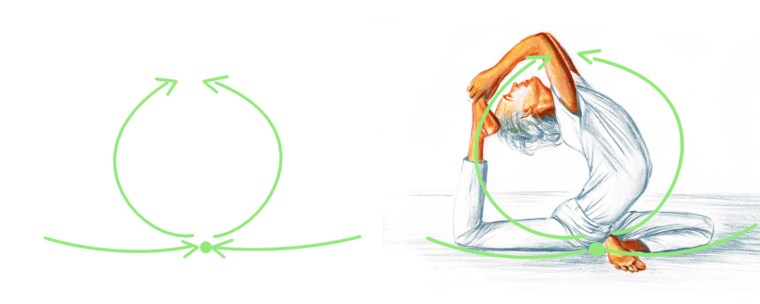


The tension is graduated. The most dynamic part ist the middle of the upper body.
The tension is tending to be continous.
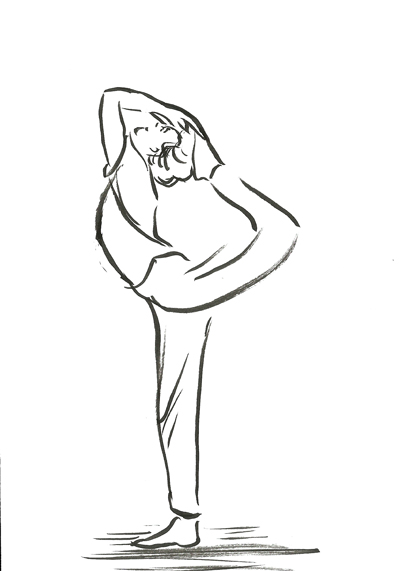
The dancer rises up and balances.
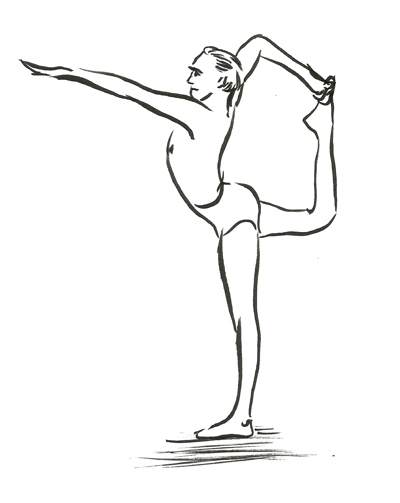
The shape is directed. The form ist shaped in accurate technical guidance.
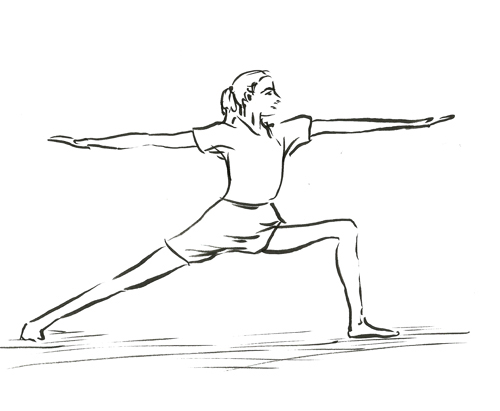
The lines of movement are horizontal.
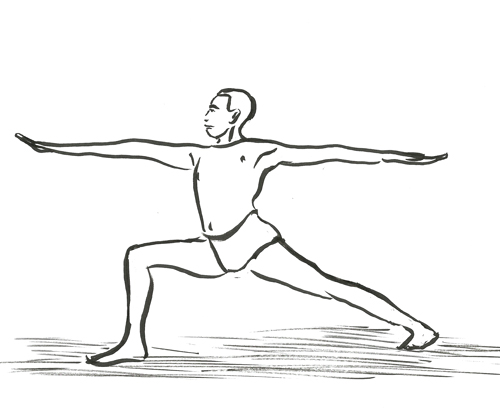
Iyengar creates the same shape.
4. Studying individual yoga – expressions
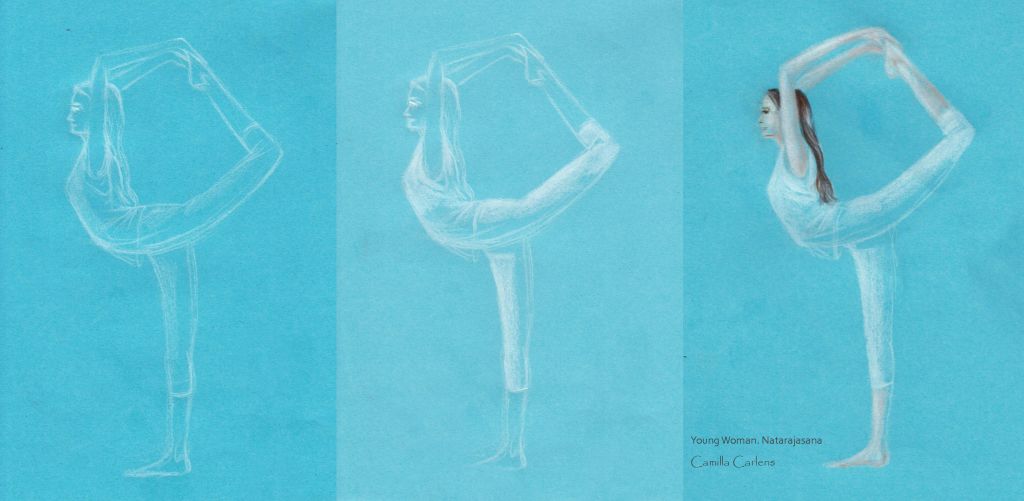
How does the person cope with the movement of the yoga pose?
Every yogi has significant qualities. These qualities make yoga poses recognizable and individual. They can be similar or contrary. The better you can recognize these qualities, the better you can learn to develop new qualities in your yoga poses, because then you can determine your expression of your poses.
The articulated dynamic of Heinz Grill

Continuous dynamic of BKS Iyengar

5. Train objective seeing

It is a kind of freedom and creativity to give the expression you want to your body pose. The expression makes a yoga pose vivid and lively. You can study your “Yoga-Expression” as well as develop your expression further.
This video “2People-2Expressions” shows always two different persons creating the same yoga pose. By seeing two pictures at the same time individual qualities can be recognized easier.
 Yoga Drawings