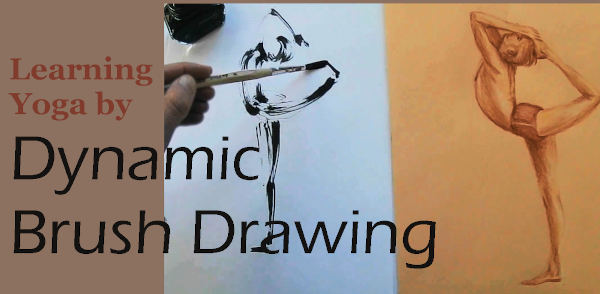
Dynamic Brush Drawing of Yoga Poses
Dynamic Brush Drawing is an expressiv drawing. The movement of your hand goes directly into the brush and creates the feeling of movement. You can learn a lot about yoga poses by drawing. It is a great possibility for yoga teachers and students.
1. What is “Dynamic Brush Drawing”?
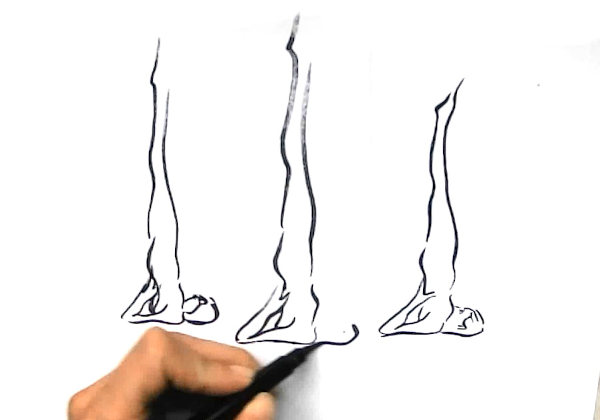
“Dynamic Drawing” (this is a original phrase) with a brush is a kind of gesture drawing with ink. “Dynamic Drawing” makes visible movement and expression of a yoga pose. This exercise is very helpful for all people who do yoga, for yoga teachers or yoga students. Each stroke you do, does express a movement. You don´t need drawing experience for this.
Dynamic brush drawing means every stroke expresses a movement. You can get to know the movement of the pose better by this exercise and you will have a new relation to the pose. Therefore you need to have a picture to observe. Chose your pose and chose a model that expresses the pose well. The observation of your model is most important. First observe the movement of all body parts of the pose, then take a stroke with your brush. The aim is not perfection but expression of the movement of the body. I recommend to take ink, because ink has a very easy and fluid going stroke.
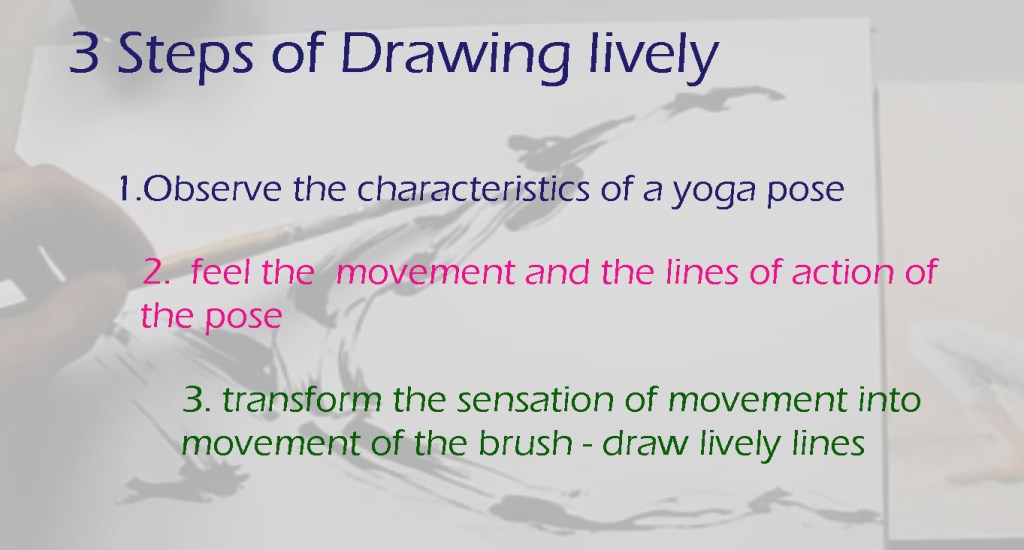
Every brush stroke expresses directly movement. A drawing is the result of movement. Every stroke is movement. The challenge and art of drawing means, to lead the hand by sensation and imagination. If you observe a yoga pose well, you develop a sensation for the characterstic movement. The Yoga Pose gets lively inside of you. Out of this lively sensation you move your hand and brush. The mind leads the stroke. You imagination leads the movement of your hand. Imagination, Sensation and movement unite in your drawing.
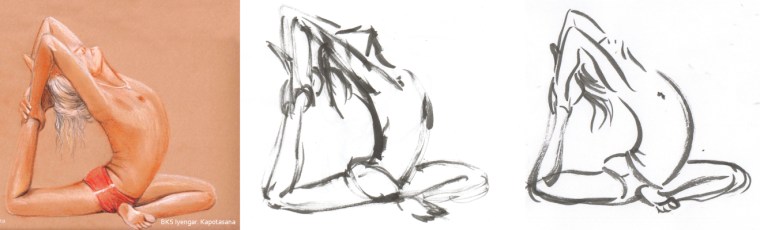
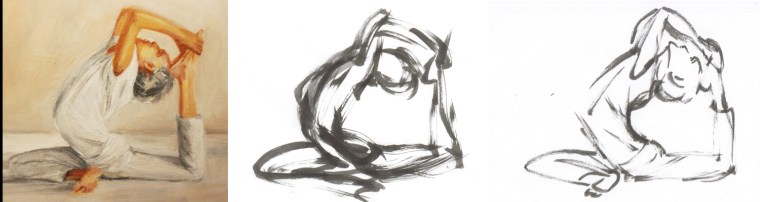
By drawing different people in the same pose, you really develop a feeling about how the person does move in the pose. So you can train your feeling for the person in the pose. You feel like the person you observe feels. It is a kind of empathy for person and pose.
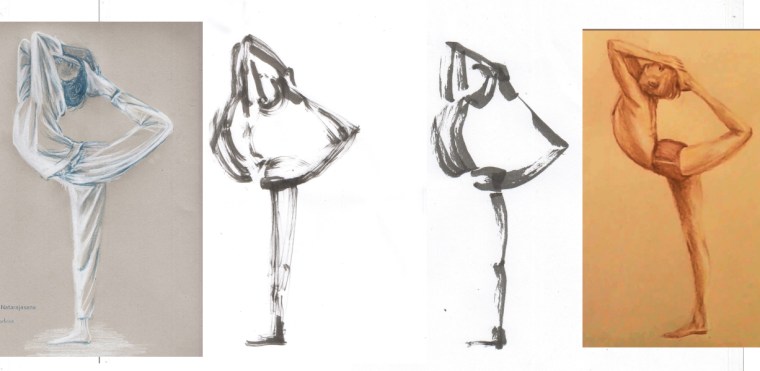
2. How to learn Dynamic Brush Drawing
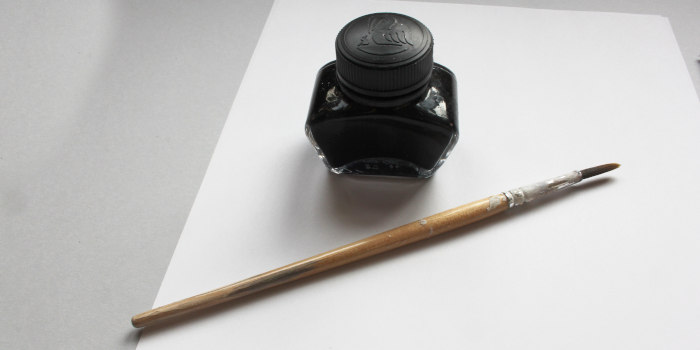
What do you need?
All you need is simple brush with a stable, small tip and some ink and a sheet of paper and of course a picture you want to draw or an idea.
3. Stroke Expression Exercise
A very easy and good exercise is to do strokes with a brush. A single strokes can express a lot. It can be strict, solid, hard, soft, shaped, shaky, free, airy, light, heavy, raising, floating. The expression of strokes can be controlled and shaped like a language. This kind of drawing realates to Chinese Ink Painting. But it differes because you do not have to learn drawing for years to learn it. You directy draw out of the overving und seeing process and out of conscious imagination.
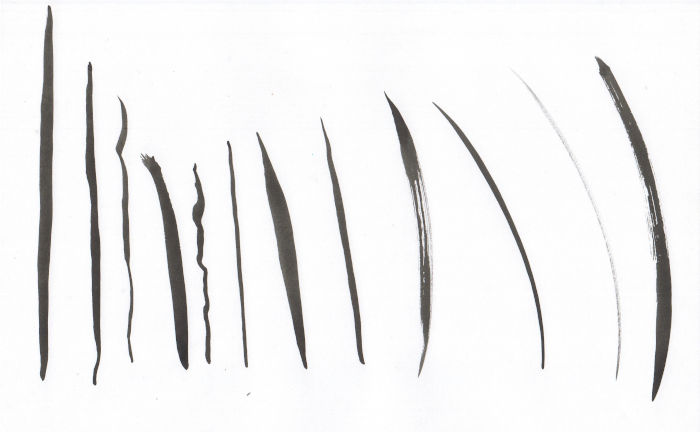
a) Draw with the full width of the brush
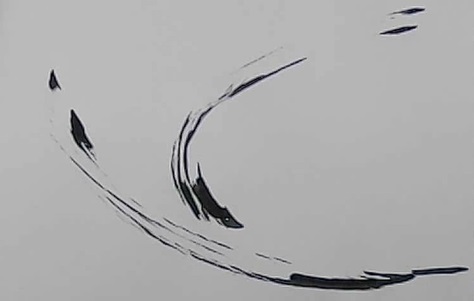
Expression depends also on the way you hold the brush. If you draw with full part of the brush, you get a width and lively line with a lot of different traces. If you feel the resistance of the brush on the paper you can better get the movement.

b) Draw with the tip of the brush
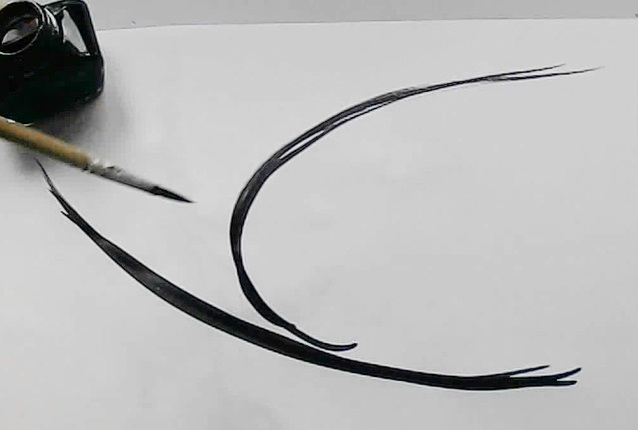
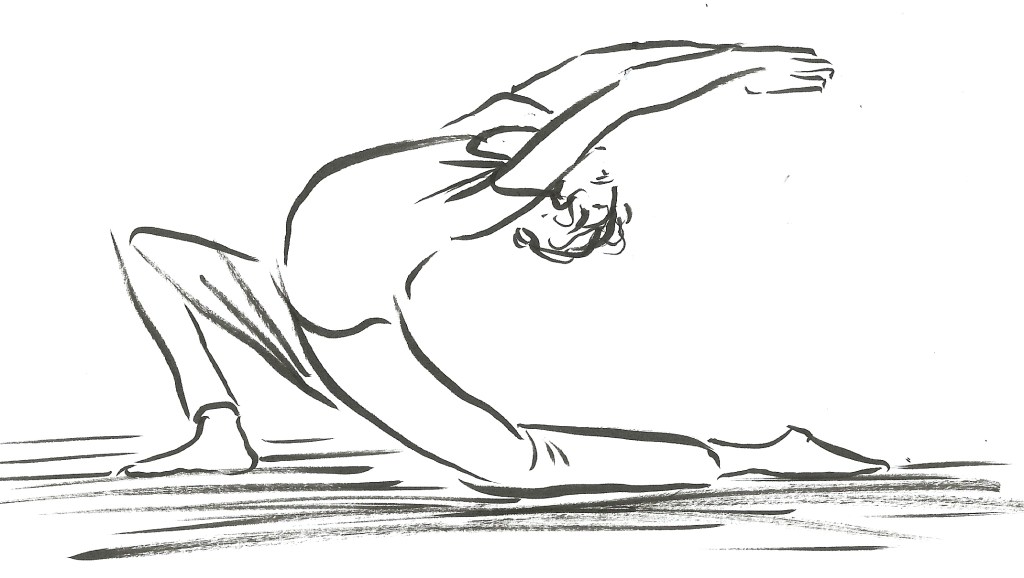
With the tip of your brush you don´t only draw the contour but you can make the contour alive. It is important to understand the difference between drawing contour and drawing movement , to make a contour lively and moving. The contour catches the posture inside. The moving line drawns the abstract movement in the body. The expression of movement depends on the nature of the lines.
4. Learn to draw Yoga Poses
a)Scorpion Pose (Vrischikasana) Narayani
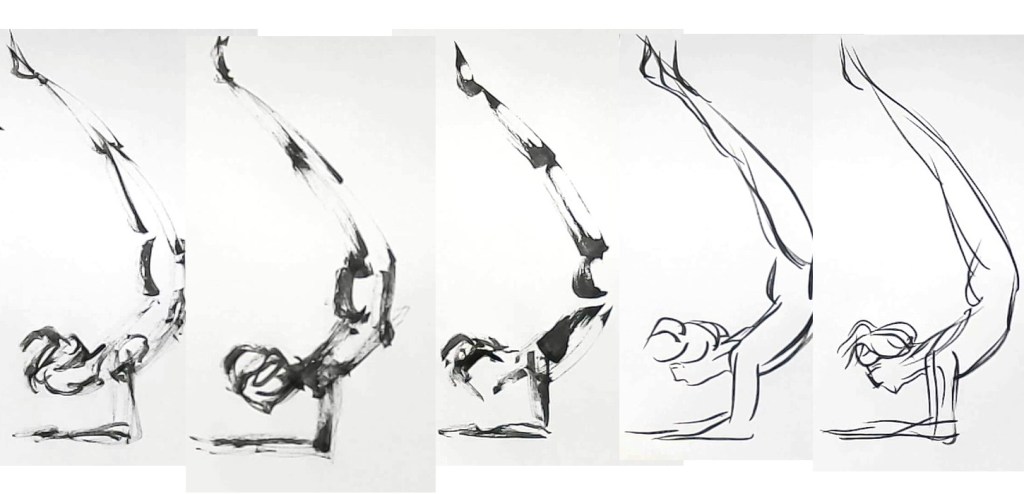
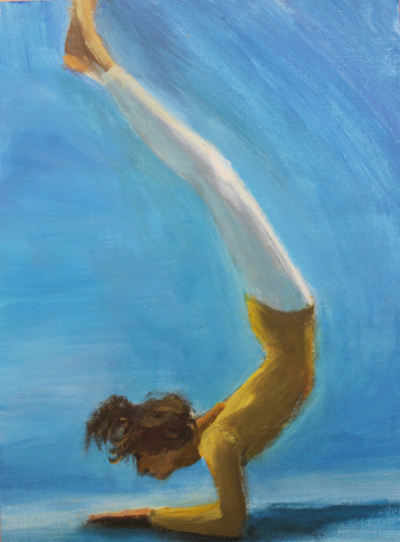
How to learn different strokes:
Suitable for beginners.
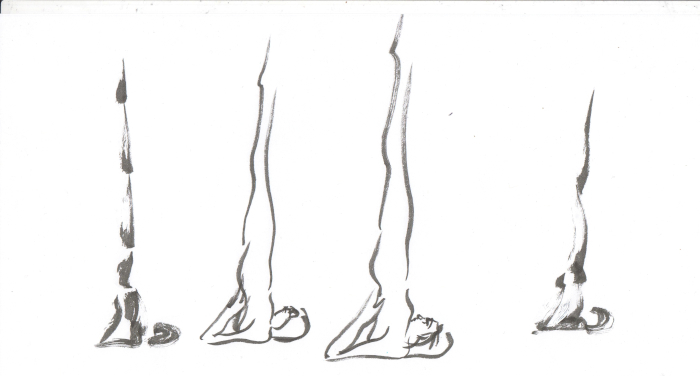
b) Shoulderstand Pose (Sarvangasana). Geeta Iyengar
Shoulderstand (sarvangasana) is a more easy pose suitable for beginners. In general it is possible for everyone to learn this kind of drawing. You can also pic every posture you want. Surely some postures are more challenging for imagination. But most important is observing and the development of a sensation for movement. The strokes is lead by this sensation. It is not about perfektion und not about perfect anatomy. The anatomy will get better by training seeing on it´s own.
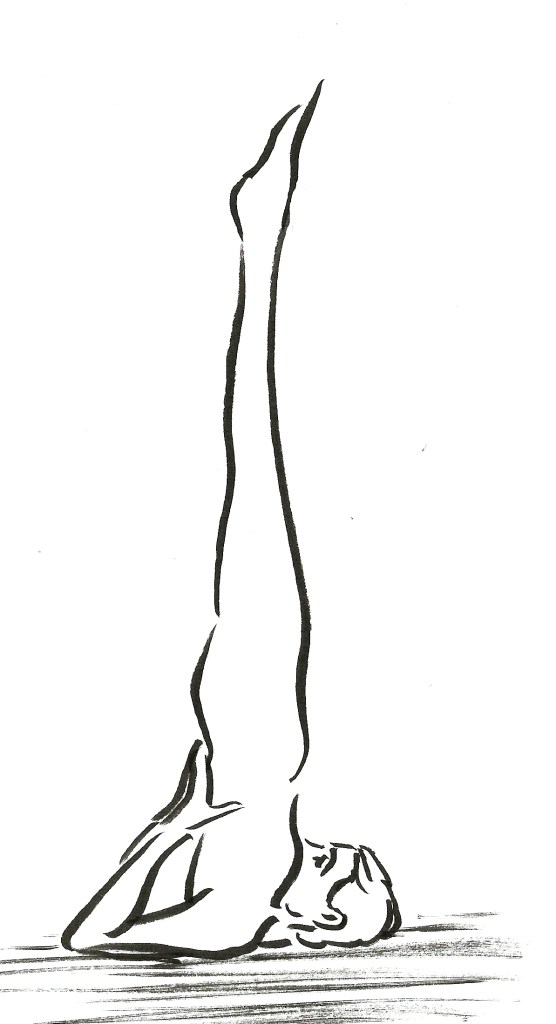
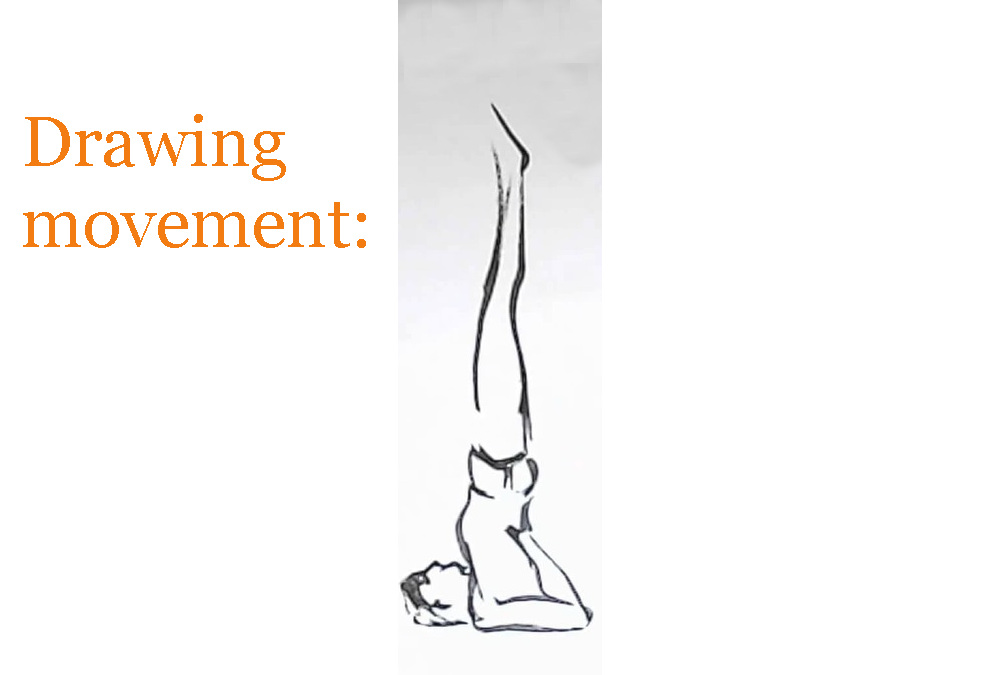
c) Shoulderstand.(Sarvangasana) BKS Iyengar
Drawing lively lines in comparison to drawing contour only
The Difference between drawing contour and drawing movement. How to make a contour alive.
d) Lord of the Dance Pose by Heinz Grill and BKS Iyengar
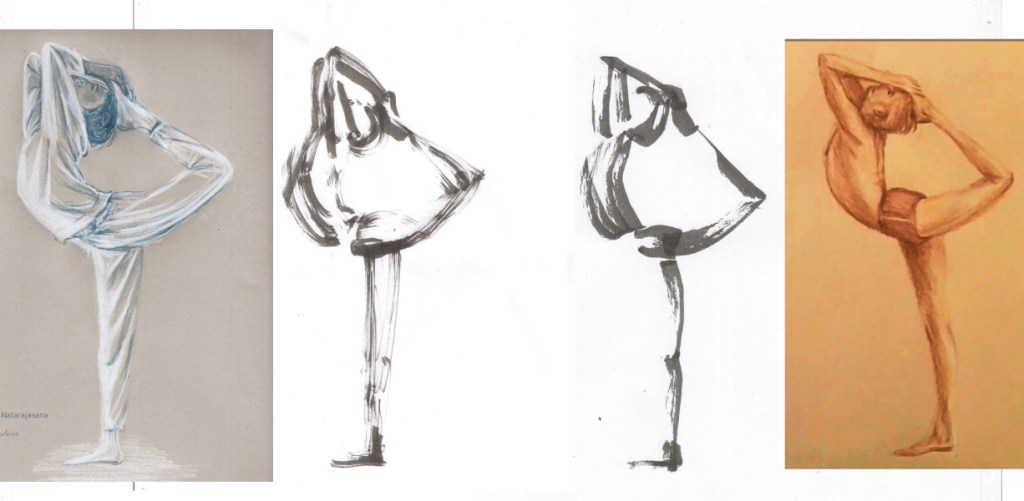
e) Lord of the Dance Pose. (Natarajasana) Heinz Grill
Difference between contour and drawing movement . Drawing the same pose in two different ways.

 Yoga Drawings